
Coach House
Coach House
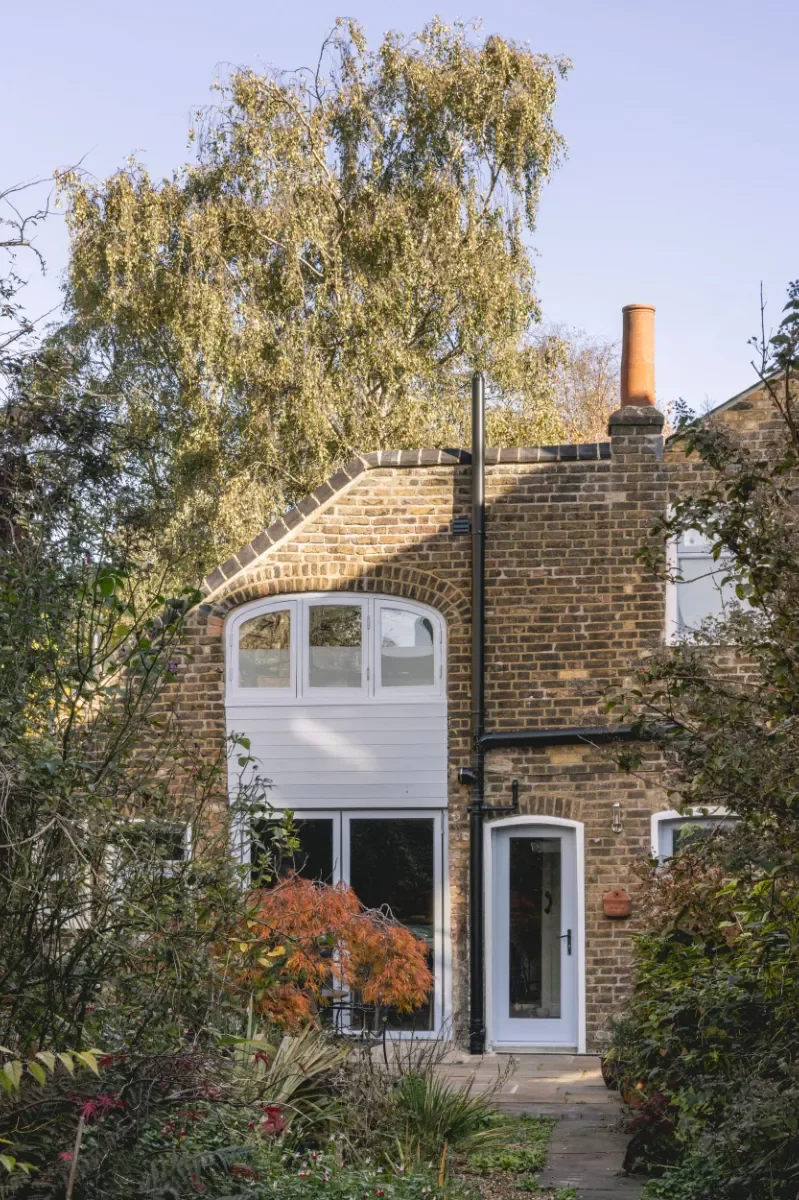
Coach House is tucked away on a wedge-shaped parcel of land between two rows of terrace houses in Highgate Village. The house differs in character to the surrounding Victorian properties: smaller in scale, it appears to be comprised of two parts – one fronted with a gable end and the other featuring a combined flat and cat-slide roof.
Maps dating from the late 1800s portray Coach House with the same footprint, suggesting that it was built as one. It is thought that a part of the property was originally a coach house with the other section thought to be accommodation, although there are no features to verify this.
Approaching from the garden, the outlines of three blocked-up windows are visible in brick front elevation.
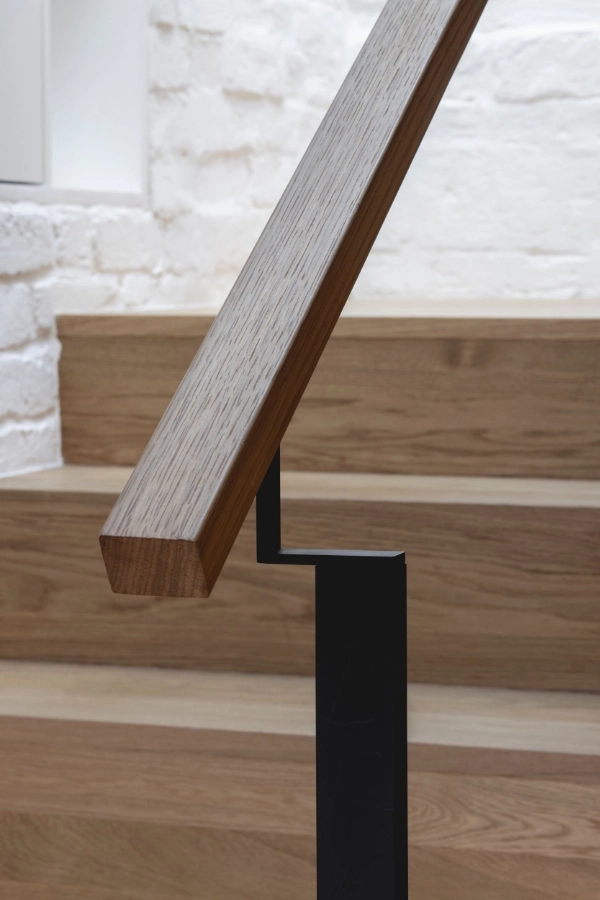
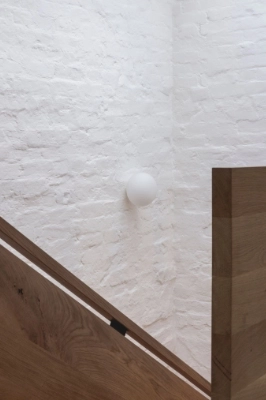
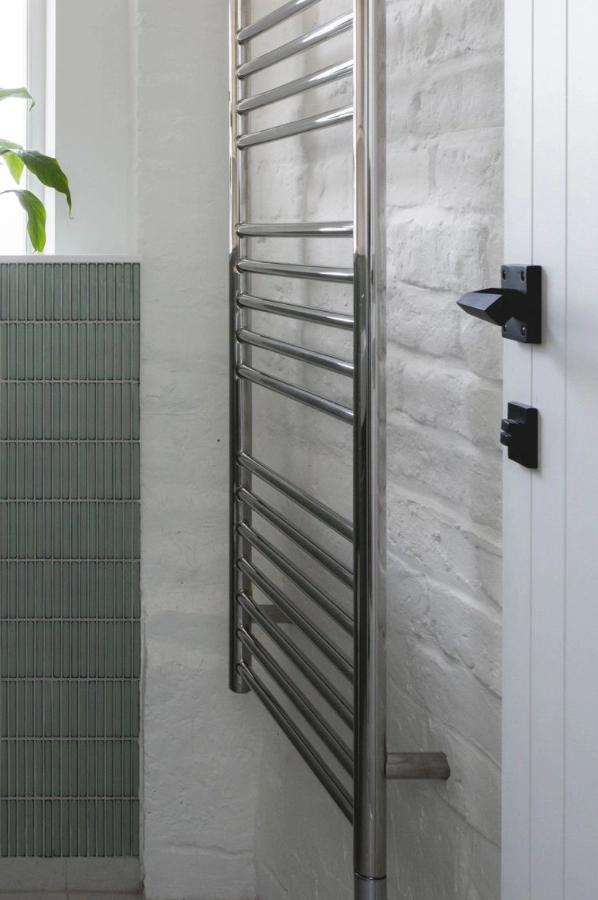
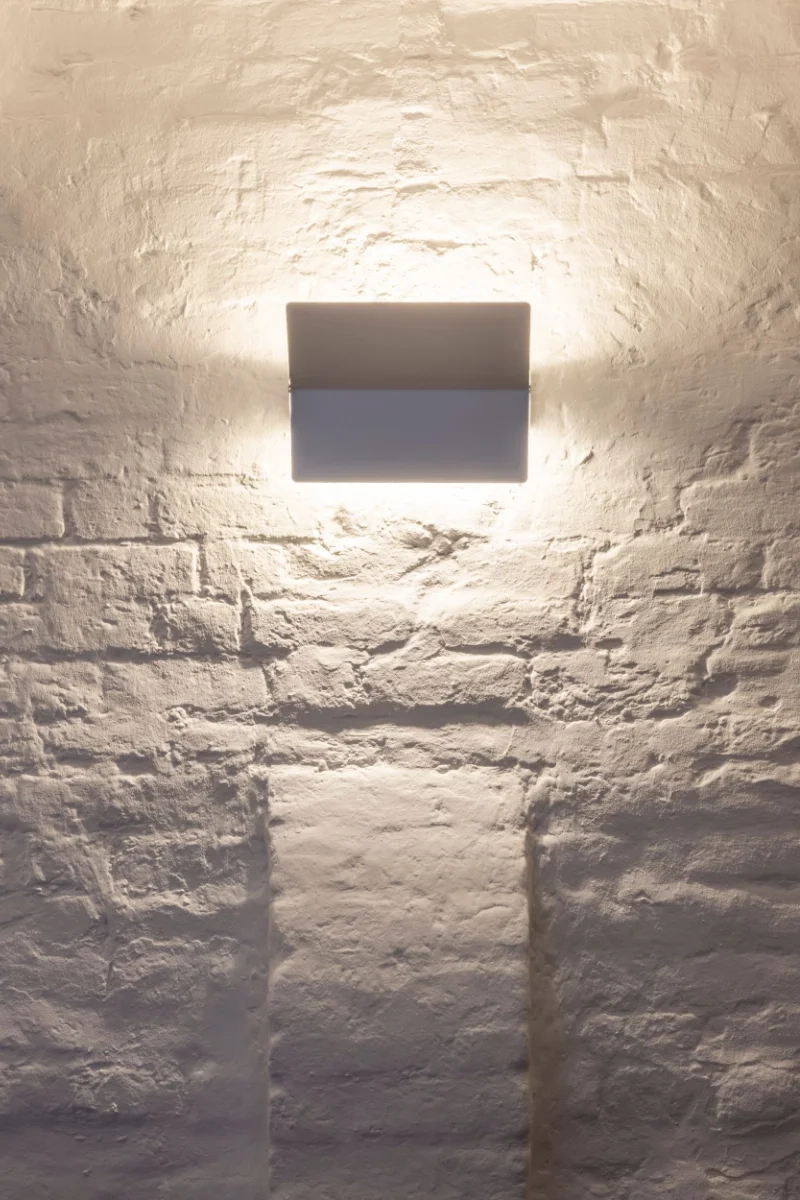
The whitewashed brick work serves the backdrop for the interior, which maintains the clarity of the old structure, the rough texture contrasting with the smooth planes of the central stairway. YSA designed the stairway to relate to the stepped profile of the original flue, retained where a fireplace had previously been removed.
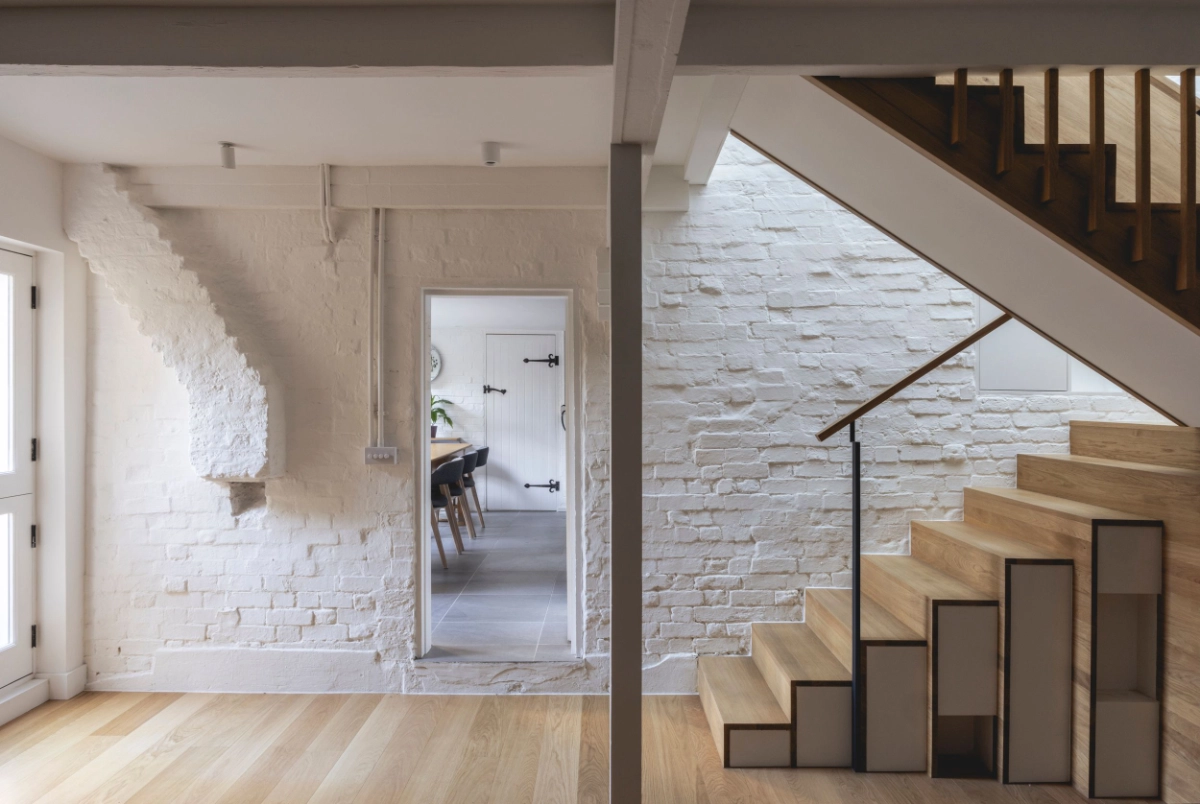
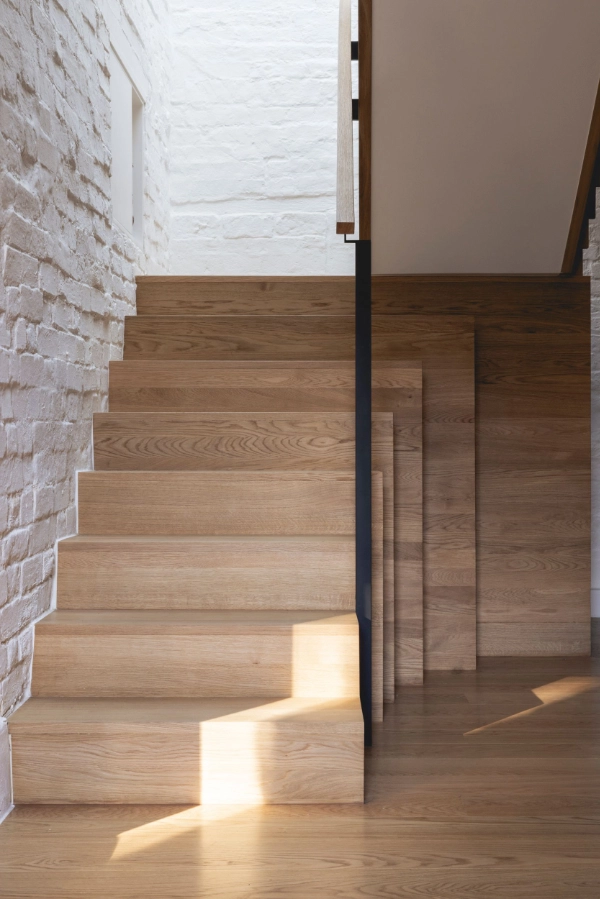
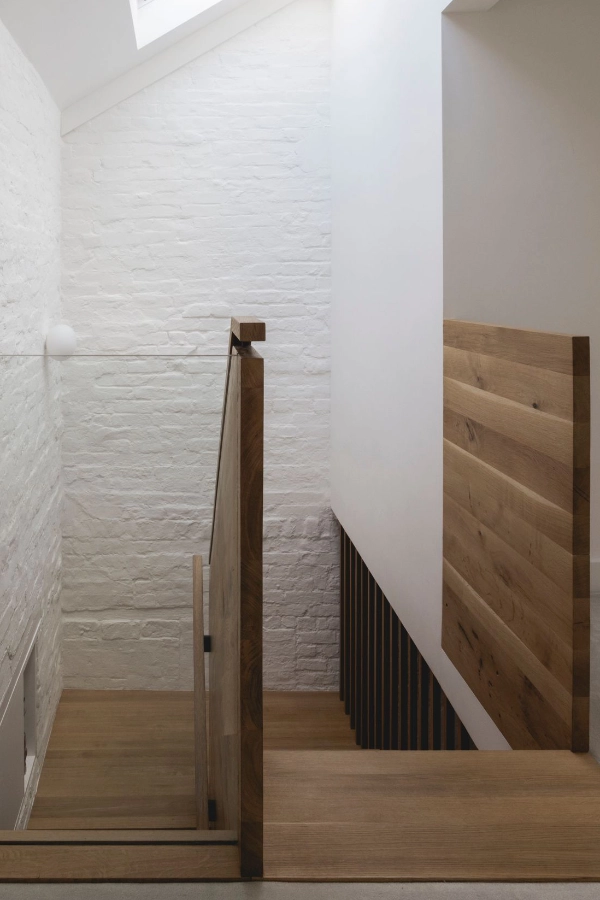
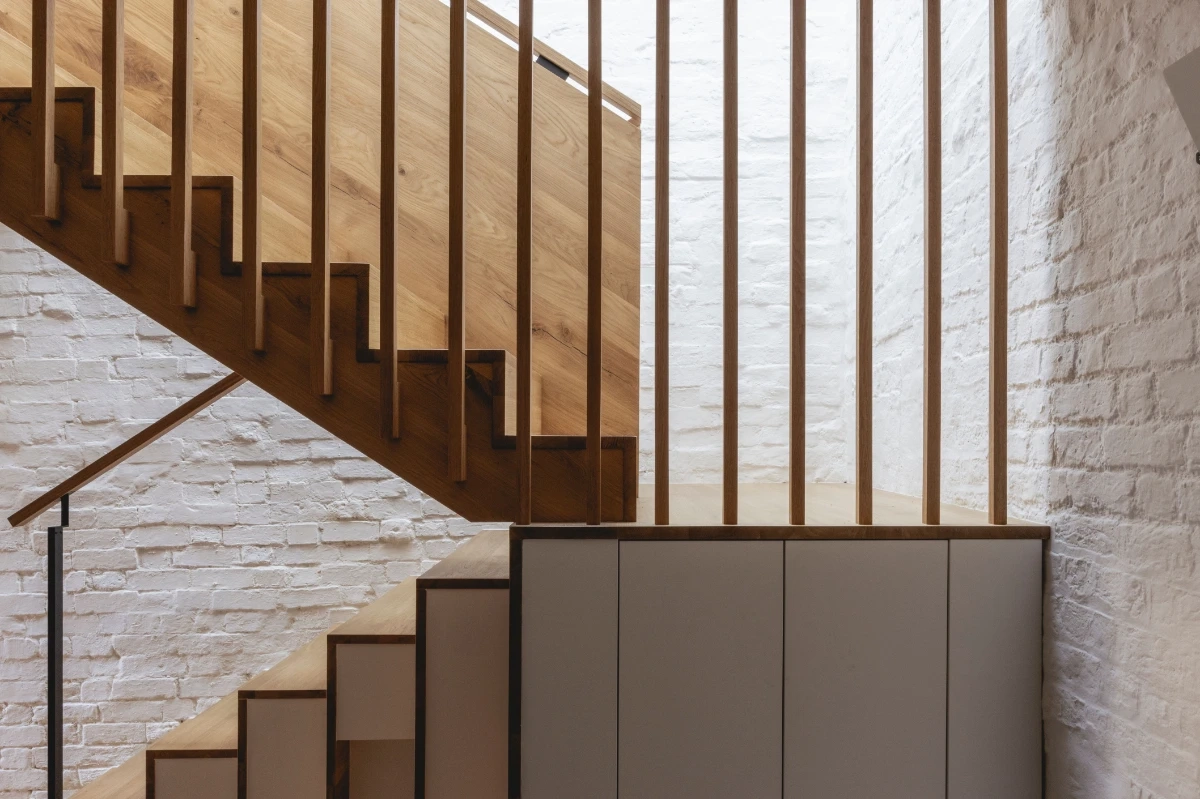
There are no windows into the ground floor living room and the only natural light comes from fixed rooflights above the stairway. YSA updated these with automated rooflights in conservation style to assist ventilation. The solid timber entrance door into the living room was replaced with a glazed door to introduce more light. We reorganised the living area layout to benefit from the newly glazed door, providing much needed ventilation and natural daylight to the current internal living area.
We inserted a new fixed window in the bricked-up window opening below the apex of the roof, providing a window to a first-floor bedroom. We inserted an additional roof light to each bedroom, and these can be opened electrically and tilted.
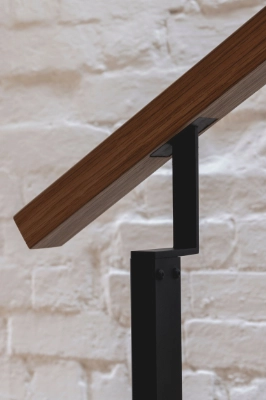
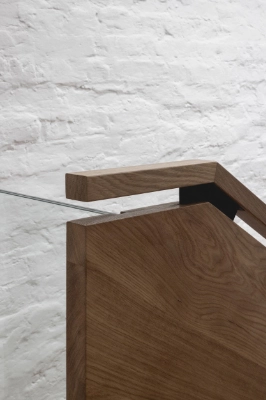
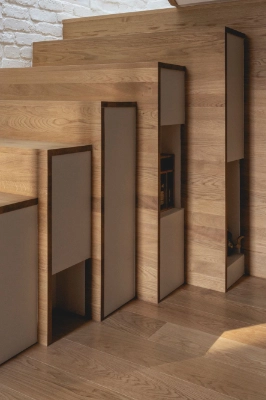
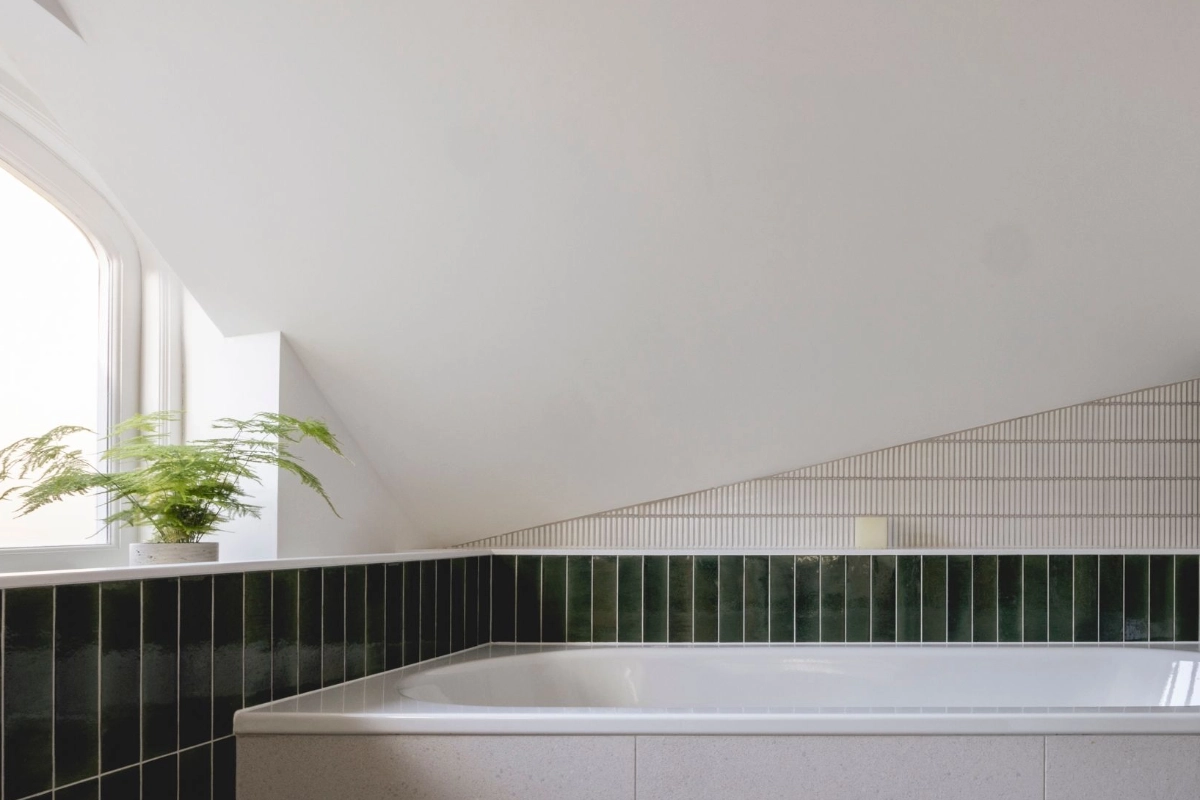
Despite the property being situated in a conservation area, YSA succeeded in obtaining planning permission to raise the roof ridge height to provide space for new insulation. YSA took a fabric-first approach, considering the design and construction of the building envelope, before stripping the existing slate roof and insulating between and above the roof rafters. We improved the energy efficiency of internal and external walls, installed underfloor heating and upgraded to an energy-efficient gas boiler. YSA recommended the installation of an air source heat pump as an additional energy-saving measure, however siting the unit in the garden was not possible due to the proximity of neighbouring properties.
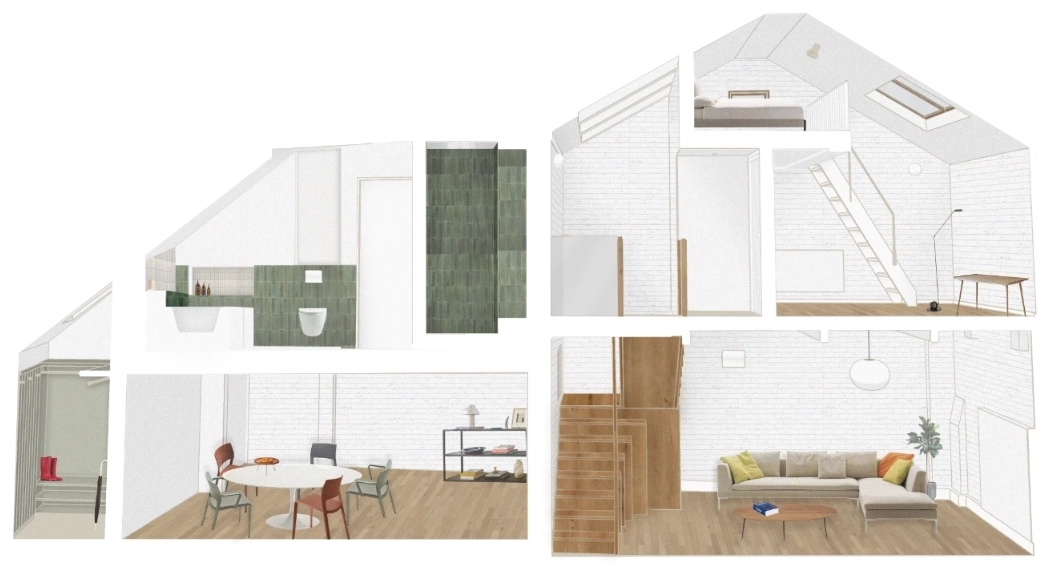
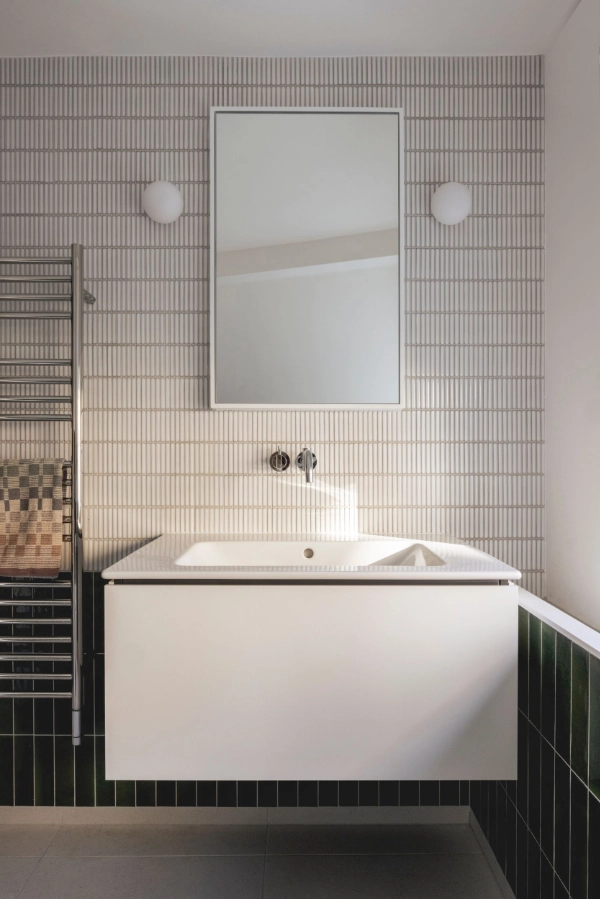
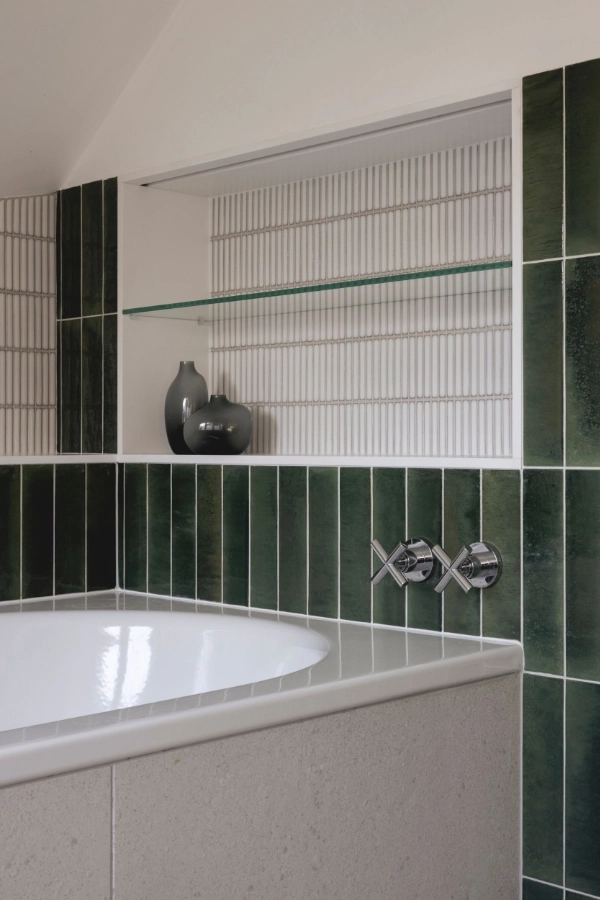
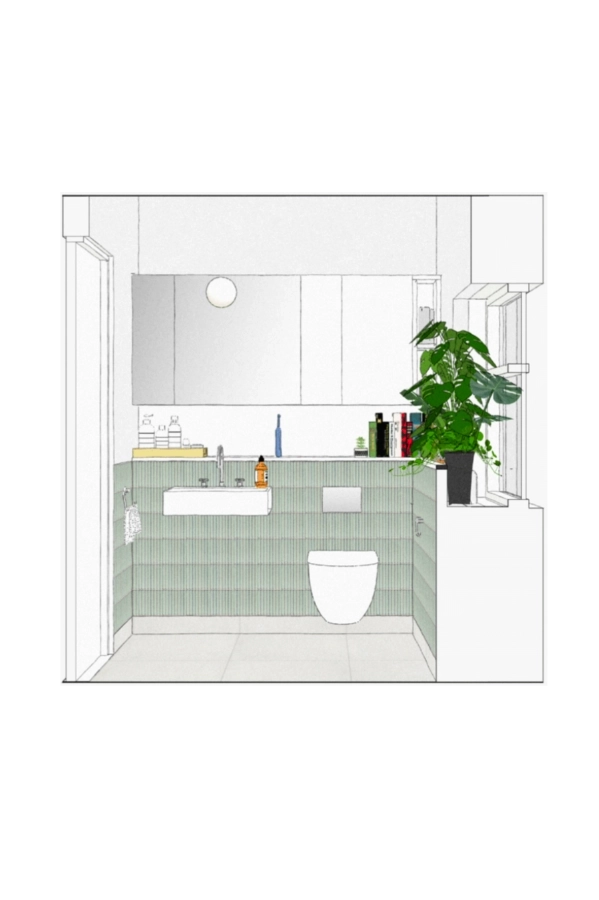
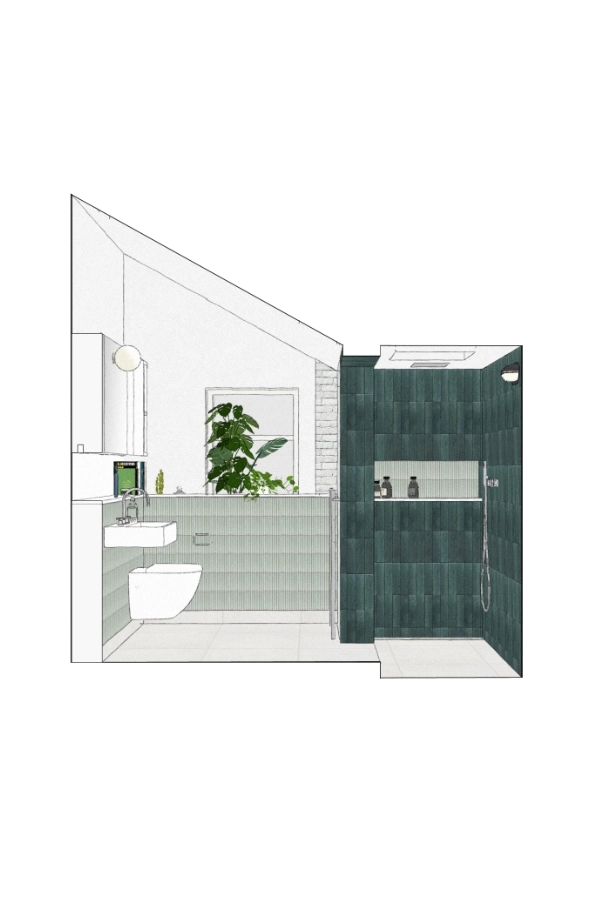
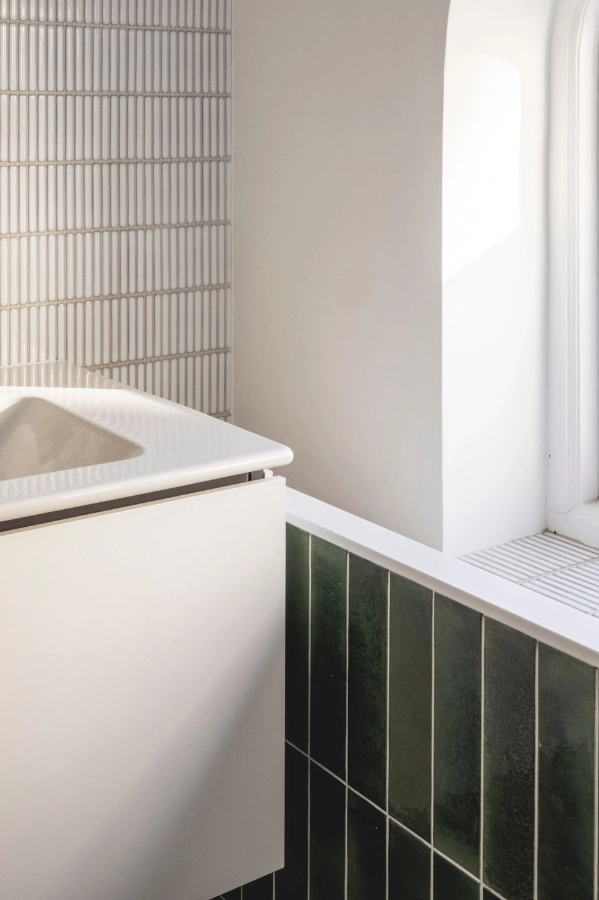
Coach House is compact, making it essential to maximise the use of space: modifications included creating two bedrooms of equal size with sleeping galleries, converting a study bedroom into an upstairs shower room, and the downstairs shower room into a coat/boot room.
We converted the existing garage into a home gym where a glazed timber door and fixed window floods this space with natural light. We modified the garage roof pitch to avoid a gutter on the boundary side; and installed a green roof to replace the existing corrugated metal roof.
Architect | Yabsley Stevens Architects
Structural Engineer | Symmetrys
Contractor | Romark Projects
Contract Type | JCT Intermediate
Photographer | Billy Bolton